No news or events this week...

Home

We are an internationally-recognised centre for the study of all forms of media. Established in 2003 with a £3.1 million grant from SPUR (Support Programme for University Research) we were recognised in the 2008 Research Assessment Exercise as being in the top ten of all UK universities for communication, cultural and media studies.

Within the Centre, a diverse group of scholars and students from many parts of the world are researching and debating questions of media history; cultural theory; media policy, technologies and practice; politics and power and new media developments. Examples of our ongoing research can be seen in our Project Showcase, and former research activities in our Knowledge Bank.

What We Do

Irish Visual Cultures

The CMR Irish Visual Culture strand examines contemporary screen culture in Ireland and Northern Ireland as well as the history and cultural impact of  Irish film, television and photography. This strand has produced research on recent Irish cinema, the social impact of television in Ireland, north and south, and on the representation of Ireland and the Irish in mainstream American and British cinema. There is a particular emphasis on nineteenth century Irish and British photography and the impact of early American cinema on the Irish diaspora on the east coast of the USA. In television the CMR has also begun to explore the social, political and cultural impact of UTV, established 50 years ago on Halloween night, 1959. More Information

Digital Cultures

This strand of the CMR’s research is exploring creative uses of digital media that acknowledge the shift from audiences to users in contemporary media studies and the changing relationships between individuals and society and public and private domains that these transformations bring.

Primary project areas will bring together key strands of thought and practice about the networked space as penetrating and modifying everyday cultural practices and spaces. These will include examination of the interface between virtual and real worlds and how these define our perceptions of the space we inhabit; investigation into the type of interaction users have with content and other people with whom they might connect in these spaces; and analysis of locative media to explore revised constructions of site and non-site and place and non-place. More Information

Journalism

The CMR Journalism strand complements the hugely successful undergraduate and postgraduate journalism training courses in the University of Ulster’s School of Media, Film and Journalism and has a particular emphasis on two areas: the idea of a 'public space' of political communication and how this impacts on democracy and accountability; and the reporting of war and conflict with a specific emphasis on the reporting of post-conflict Northern Ireland and the politics of peace.

Examination of the future of local news reporting in Britain and Ireland and the long term viability of local news outlets is becoming an increasingly important area of our work. More Information

Media Policy and Public Cultures

The CMR Media Policy strand provides an informed voice on contemporary matters of public concern around the media. Researchers inform public policy agendas in Ireland, the UK and beyond, through projects on media ethics; broadcasting policy, including local and regional issues; cultural and heritage issues; media regulation; the impact of changing communication technologies on the young and media literacy. This network exchanges ideas and research findings, and joins with NGOs, media workers’ organisations, press freedom campaigns and consumer groups in their debates with regulators, the broadcasters and the Government. A particular goal, where appropriate, is to support such groups by providing them with expert evidence, based on academic research.

We have strong links with The Media Communication and Cultural Studies Association (MECCSA). Professor Messenger Davies is currently co-ordinator of the MECCSA policy network. More Information

Media Practice

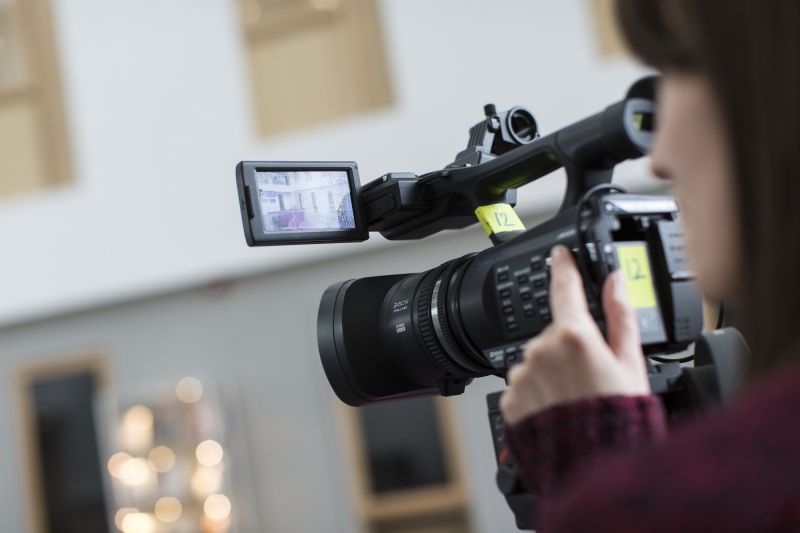
The CMR Media Practice strand explores the media through critical practice and participation. Key areas of work are documentary films, photography and the digital arts, with production techniques in these areas used to illustrate and explore various ideas and ideologies. The documentary format is both the subject of our work, and the process by which we work.

In particular, participatory methodology underpins our subjects’ co-ownership of their stories. This is particularly important in work, such as the Prisons Memory Archive and Unheard Voices that addresses stories from the Troubles, where psychological and political sensitivities remain raw. More Information

Project Showcase

The Foursquare Mayor Chair

The Foursquare Mayor Chair is an installation that uses the socail media checkin app foursquare to claim a mayorship of the chair. The mayorship enables the visitor to the cafe to use the chair on future visits to the cafe, ensuring them a comfy seat and a place to rest their weary legs.

The chair has been stripped and re-upholstered (using old work shirts) and rebranded as The Foursquare Mayor Chair. As part of continuing research into the ways Galleries and Museums engage visitors using digital media. The chair can only be used by is Foursquare Mayor, securing them a comfy seat in the cafe and special preferential treatment and discounts.

Part Art Object and part marketing tool, The Foursquare Mayor Chair is a playful intervention in the Cafe space. Built on a micro budget from recycled materials and all associated media built using free services and technologies, this project focuses on the ability to make small meaningful changes to a space (both physical and digital) and for the project to be easily replicated, assimilated and rebuilt by organisations without having to make large investments.

Members of the public can engage with the installation by checking in when they are near its location using the Foursquare App on a mobile device, with continual checkins the mayorship can be earned/stolen. This mayorship will earn them the privilege of being able to use the chair whenever they visit it's installation location.

Foursquare Mayor's Chair Banner

IMAKILLER : Pervasive Gaming

IMAKILLER is a game of assassination. Players must kill swiftly and with finesse. Players must use designated stand in weapons to perform the kills, and weapons are given classes based on their difficulty to perform the kill. When a player kills their target they inherit a new target. Different players are worth different amounts of points based on their difficulty level and players targets are randomly selected. All kills must be documented and submitted to receive points, with multipliers and bonus points for the way this is achieved. Players must upload the documents to Flickr or Youtube with the tag #IMAKILLER.

IMAKILLER is a pervasive game, this means that it is played at all times and in all spaces apart from safe zones until the game is finished and only one student survives. Players will receive achievement badges for each kill and prizes will be awarded to the players with the most points when the game ends.

[in]visible belfast

[in]visible belfast, is a game in which, guided and dared by an anonymous author who leaves clues and orchestrates puzzles throughout the city, the main character Ana and game-players are drawn deeper and deeper into the internal labyrinth of Belfast.

Joined by a young writer named Meri and a helpful artist named Jack, Ana attempts to solve the mystery to discover what lies at the heart of the city of Belfast.

This is a form of alternate reality game (ARG), one that immersively draws players into the multilayered realities of the city, engaging them with written literature, narrated and media events online, and actual performances and live events.

The narrative of [in]visible belfast follows an inner world of Ciaran Carson, an imaginative, spatial history of Belfast, in combining pieces of many works of literature into a multifacted whole.

Great voices of literary history mingle with the voices of characters, all of whom communicate with players in a multitude of ways, by engaging with both the story and the digital and location-based puzzles.

Players will build a dynamic and personal history of Belfast in a new form. In the game, players reveal the invisible city, and in the city, the universe.

[in]visible belfast is a project by Danielle Barrios (English Literature) and Alan Hook (Interactive Media Arts) at the University of Ulster, and is currently supported by that university, as well as Queens University through the Queens Quarter Weekends events programme, the Crescent Arts Centre and its Belfast Book Festival, in collaboration with cross-platform Belfast production company Filmtrip Ltd. The game will run from 12 May to 19 June 2011.

Register for [in]visible belfast

Mr Alan Hook

Prisons Memory Archive

The Prisons Memory Archive has recorded over 200 interviews from ex-users of the Armagh, Maze and Long Kesh Prisons. These prisons were both touchstone and tinderbox during the 30 years of the Troubles. The range of participants includes governor, prisoner, prison officer, teacher, chaplain and probation officer.

View Prisons Memory Archive site

Dr Cahal McLaughlin

Children, news media and citizenship

A study of whether, and how, the BBC’s children’s news programme, Newsround, could help to foster citizenship and how it could be a model for participatory media, with children contributing and responding to the news directly. The study was funded by the BBC and AHRC as part of their Knowledge Exchange Programme and was carried out in 2008-9 by academics in the universities of Cardiff, Ulster and Bournemouth, working with children in Glasgow, Cardiff, Bournemouth and the Coleraine area in Northern Ireland.

Young citizens and the BBC

Prof Máire Messenger Davies

Selective Subjective: The Historical Photograph as a trace of History

Arthur J Munby collected a large number of photographs of working-class women in London from 1859. His diaries record his observations on the rising trade of commercial urban working class photography in London and provide fascinating insight into the formation of class and gender-based identities for both scholars and practitioners of photography.

View A Trace of History site

Dr Sarah Edge

Red Riding Hood

"Le Petit Chaperon Rouge" photographic exhibition Riverside Gallery, Coleraine.
The exhibition was from February to May 2008, Created by Dr Sarah Edge.

RediscOvery- Augmented realities and constructions of lost place

Helen Jackson has been investigating how locational technologies may offer new possibilities in articulating the urban landscape where time has eroded the material representations used to construct social histories and memories. Today’s networked mobile technologies can render augmented realities as media forms that have their nodal fields in both physical (geographical) and digital (virtual) attributes. Using these devices, Helen has created an augmented reality browser for the iPhone that augments historical photographic archives of the Titanic Quarter in Belfast, with the real scene. The project aims to investigate whether these technologies have the ability to draw on the physical and cultural uniqueness of the ‘here and now’ of a specific location and align these with virtual geometric spaces to create new a relationship between temporal and spatial perception.

The project was funded by the University of Ulster’s Proof of Principle Award, and developed in conjunction with the Belfast-based mobile applications development company, Paperbag Limited (http://paperbagltd.com/uds-portfolio/rediscovery/)

Archive photography: Olympic entering Thompson Dock, 1911, A.R. Hogg Photograph reproduced courtesy of the Trustees of National Museums Northern Ireland

Helen Jackson

Is that funny anywhere else? Six nation study on children’s TV humour

This humour research project, funded by the International Institute for the Study of Youth and Media in Munich, aims to give producers of children’s television programmes a valuable insight into children’s humour. This in turn helps producers take account of cultural difference and tailor programmes accordingly. The CMR teamed up with researchers and schools from Germany, Israel, South Africa, the Republic of Ireland and the USA to try to discover what makes children laugh.

IZI Publication - Children - Humour - Television

Prof Máire Messenger Davies

Staff

The Centre's international group of full-time staff bring not only their expertise to the CMR's programme but also a network of international collaborators, making the CMR a junction through which many people and ideas are flowing.

Dr Steve Baker

Dr Steve Baker contact photo

Position:

Lecturer in Film and Television Studies

Contact Details:

Office Number

Office B229A

Telephone

+44 (0)28 7012 3060

Email

sj.baker@ulster.ac.uk

Biography

View Biography of Dr Baker

Top of Page

Dr Gail Baylis

Dr Gail Baylis contact photo

Position:

Lecturer, School of Media, Film & Journalism; Subject Director, Photo Imagining Minor

Contact Details:

Office Number

Office C215

Telephone

+44 (0)28 7012 3363

Email

g.baylis@ulster.ac.uk

Biography

View Biography of Dr Baylis

Top of Page

Dr Ciara Chambers

Dr Ciara Chambers contact photo

Position:

Lecturer in Film Studies

Contact Details:

Office Number

Office C238

Telephone

+44 (0)28 7012 3578

Email

c.chambers@ulster.ac.uk

Biography

View Biography of Dr Chambers

Top of Page

Professor Sarah Edge

Professor Sarah Edge contact photo

Position:

Director of Northern Ireland Skillset Media Academy

Contact Details:

Office Number

Office B240

Telephone

+44 (0)28 7012 4176

Email

sj.edge@ulster.ac.uk

Website

Arthur Munby- Net Art Project

Biography

View Biography of Professor Edge

Top of Page

Emeritus Professor Richard Ekins

Emeritus Professor Richard Ekins contact photo

Position:

Emeritus Professor of Sociology and Cultural Studies

Contact Details:

Office Number

Office C217

Telephone

+44 (0)28 7012 3200

Email

rjm.ekins@ulster.ac.uk

Biography

View Biography of Emeritus Professor Ekins

Top of Page

Mr Adrian Hickey

Mr Adrian Hickey contact photo

Position:

Teaching Fellow in Interactive Media Arts; Associate Member, CMR

Contact Details:

Office Number

Office C212

Telephone

+44 (0)28 7012 4479

Email

a.hickey@ulster.ac.uk

Biography

View Biography of Mr Hickey

Top of Page

Mr Alan Hook

Mr Alan Hook contact photo

Position:

Lecturer in Interactive Media Arts

Contact Details:

Office Number

Office C211

Telephone

+44 (0)28 7012 4267

Email

a.hook@ulster.ac.uk

Biography

View Biography of Mr Hook

Top of Page

Mrs Helen Jackson

Mrs Helen Jackson contact photo

Position:

Lecturer in Media Arts, School of Media, Film and Journalism

Contact Details:

Office Number

Office C219

Telephone

+44 (0)28 7012 4184

Email

h.jackson@ulster.ac.uk

Biography

View Biography of Mrs Jackson

Top of Page

Dr Gregory McLaughlin

Dr Gregory McLaughlin contact photo

Position:

Senior Lecturer, Media and Journalism Studies

Contact Details:

Office Number

Office B231

Telephone

+44 (0)28 7012 4132

Email

g.mclaughlin@ulster.ac.uk

Biography

View Biography of Dr McLaughlin

Top of Page

Dr Cahal McLaughlin

Dr Cahal McLaughlin contact photo

Position:

Senior Lecturer in Media Studies

Contact Details:

Office Number

Office B227

Telephone

+44 (0)28 7012 4018

Email

c.mclaughlin2@ulster.ac.uk

Website

Prisons Memory Archive

Biography

View Biography of Dr McLaughlin

Top of Page

Professor Martin McLoone

Professor Martin McLoone contact photo

Position:

Professor of Media Studies (Film, Television & Photography), Director Centre for Media Research

Contact Details:

Office Number

Office C206

Telephone

+44 (0)28 7012 4372

Email

m.mcloone@ulster.ac.uk

Biography

View Biography of Professor McLoone

Top of Page

Emerita Professor Máire Messenger Davies

Emerita Professor Máire Messenger Davies contact photo

Position:

Professor of Media Studies

Contact Details:

Office Number

Office C217

Telephone

+44 (0)28 7012 4069

Email

m.messenger-davies@ulster.ac.uk

Website

What do children want from the BBC?

Biography

View Biography of Emerita Professor Messenger Davies

Top of Page

Dr Colm Murphy

Dr Colm Murphy contact photo

Position:

Head of School Media, Film and Journalism

Contact Details:

Office Number

Office B228

Telephone

+44 (0)28 7012 3130

Email

c.murphy@ulster.ac.uk

Biography

View Biography of Dr Murphy

Top of Page

Dr Robert Porter

Dr Robert Porter contact photo

Position:

Lecturer in Cultural and Political Theory

Contact Details:

Office Number

Office B226

Telephone

+44 (0)28 7012 4974

Email

r.porter@ulster.ac.uk

Biography

View Biography of Dr Porter

Top of Page

Mrs Sally Quinn

Mrs Sally Quinn contact photo

Position:

Special Projects Manager for CMR

Contact Details:

Office Number

Office B229B

Telephone

+44 (0)28 7012 3361

Email

s.quinn@ulster.ac.uk

Biography

View Biography of Mrs Quinn

Top of Page

Dr Niamh Thornton

Dr Niamh Thornton contact photo

Position:

CMR: Researcher

Contact Details:

Office Number

Office C209

Telephone

+44 (0)28 7012 3326

Email

n.thornton@ulster.ac.uk

Biography

View Biography of Dr Thornton

Top of Page

Postgraduate Opportunities

The CMR has a lively and vibrant postgraduate research culture, and is an internationally renowned centre of excellence for postgraduate research into the media. In 2006, CMR postgraduates hosted the MECCSA postgraduate network conference in Coleraine, fund by the Arts and Humanities Research Council (AHRC). It was attended by postgraduate students from across the world.

If you are interested in becoming a part of our postgraduate community, details of how to apply are available through the Research Graduate School in the Faculty of Arts. Click here

Current Postgraduate Projects

Kirk Brownlee: The films of Krzysztof Kieslowski

Alexandra Cochrane: The politics and economics of preschool children's television: A production and audience research study

Geraldine Gallagher: Voices Interned: families of those who were imprisoned during the Troubles

Ayumi Hata: The voice in Japanese documentary

Rachael Kelly: Wine, despair and women's clothing: Gender anxiety in screen representations of Marcus Antonius

Rory Kelly: Directing the greatest generation: Cultural memory of the Second World War in the films of Steven Spielberg

Orla Lafferty: UTV and the 'Troubles': An archival exploration from 1968 until 1998

Brian Laughlin: The reporting of health and the health service

Chris Legge: The emergence of the cinema in the north of Ireland 1890 - 1920 

Jolene Mairs: Prison Memory Archive: recording stories from conflict

Jennifer Mooney: The Irish in American vaudeville and early cinema 1880 - 1920

Daire Mulholland: The information/knowledge economy and education in NI

Margaret O'Brien-Moran: Eyes fixed on the past: The poole imperial collection of photographs

Phil Ramsey: The degradation of the public sphere in Britain 1994-2007

Vishnu Thirukkovalluri: Telugu cinema as a cultural form

MRes

Alice Gaisburgh-Watkyn: Drive time radio programming

Declan McCrink: Auteurship in American TV drama: A study of Joss Wheedon

Thomas Scott: Representations of the Irish in American cinema 1915 - 1929

Recent PhD Graduates

Anne Burke: Studying photographic history and especially the relationship between photography and ethnology in Ireland. Her research is informed by her own photographic practice and her thesis will be presented as both a written dissertation and a practical photography project

Ciara Chambers: Newsreel representations of Ireland. Aim is to examine the portrayal of contemporary events in Ireland through cinematic newsreels and the implications of their tone and content

Alexander Fisher: The use of music in African cinema

Liz Greene: Research into sound design in cinema and especially on the innovative work of Alan Splet. She was given the opportunity to access a unique archive of film sound at the American film institute, San Francisco

Julian Kucklich: Work hard, play harder: the politics of play in the digital games industry

Di Liu: Music in Chinese film

Helen Thornham: Narratives of the videogame: Gender, gaming and gameplay

Knowledge Bank

This Knowledge Bank contains information placed on the CMR and former Media Studies Research Institute websites in the past five years. It is archived according to the year in which the material was put up.

Links
Contact Us

Contact Us

Special Projects Manager for CMR

Name

Mrs. Sally Quinn

Telephone

+44 (0)28 7032 3361

E Mail

s.quinn@ulster.ac.uk

Address

Centre for Media Research
Coleraine campus
University of Ulster
Cromore Road
County Londonderry
BT52 1SA